

9 Mistakes to Avoid When Starting Your Amazon FBA Business in 2025
Join Isaac Kuhlman from The Original Amazon Coach as he reveals essential strategies for avoiding costly mistakes in your Amazon FBA business. Learn the importance of selecting the right product, effective pricing, inventory management, and maintaining compliance with Amazon’s terms. Isaac shares insights on leveraging branding, crafting a robust marketing strategy, and the importance of seeking expert advice to mitigate risks. Discover actionable tips and exclusive resources to set your Amazon FBA venture up for success. Don’t miss his crucial lessons from a $240,000 blunder.
Episode Summary:
In this insightful episode, Isaac Kuhlman dives deep into the intricacies of successfully launching and managing an Amazon FBA business, focusing on the common pitfalls that sellers face.
Featuring real-world anecdotes from his own journey, including a critical lesson learned the hard way, this episode is a must-watch for anyone looking to excel in e-commerce using Amazon’s platform.
Isaac begins by discussing the critical mistakes that sellers often make, emphasizing how choosing the wrong product or failing to diversify can be a serious hindrance. As he explains, having a well-rounded product line and keeping up with market trends can set sellers up for success.
He also highlights the importance of competitive pricing, accurate cost projections, and factoring in Amazon’s FBA fees to avoid unwelcome surprises. Reinforcing these insights, Isaac states, “Your pricing needs to be a fair value for the customer and be competitive with your competitors.”
As the episode progresses, Isaac outlines various operational strategies, including effective inventory management and the significance of handling customer reviews.
He underscores the necessity of adherence to Amazon’s terms of service to safeguard your seller account from suspension. The lesson learned from his costly error is shared as a reminder of the imp
Key Takeaways:
Picking the right product is crucial, considering launch costs and market trends.
Maintaining fair pricing ensures competitiveness while preserving healthy profit margins.
Stay compliant with Amazon’s terms of service to avoid account suspension.
Building a strong brand enhances conversion rates and offers protection from counterfeit sellers.
A strategic marketing plan is essential to effectively promote your products and grow your business
Notable Quotes:
“Imagine you cost your brand a quarter of a million dollars in 30 days.”
“Your pricing needs to be a fair value for the customer and be competitive with your competitors.”
“Do not slack on this one. Mistake number four is poor inventory management.”
“Make sure you’re complying with those and all the other ones.”
“Trying to do everything yourself and not asking questions… well, you’re probably right.”
Resources:
Learn more about working together here – https://originalamazon.coach/lets-get-to-work/
Timeline:
0:00 Avoiding Costly Mistakes in Amazon FBA Business
1:01 Common Mistakes New Sellers Make on Amazon
4:19 Avoiding Common Mistakes for Successful Amazon FBA Selling
6:40 Building Brand Value and Effective Marketing Strategies
8:36 The Costly Mistake of Not Seeking Expert Advice
9:40 Avoiding Common Pitfalls in Starting an Amazon FBA Business
Related Searches:
amazonfba #amazonfbaforbeginners #amazonfbastepbystep #amazonfbatips #fba #amazon #amazonbusiness
Amazon FBA, eCommerce, branding, inventory, pricing, Amazon FBA mistakes, product selection tips, inventory management strategies, Amazon compliance rules, FBA profit margins, how to avoid Amazon FBA mistakes, importance of brand registry on Amazon, how to manage Amazon FBA inventory, strategies for Amazon FBA pricing, how to respond to Amazon reviews
0:00:00 – (Isaac Kuhlman): Imagine you cost your brand a quarter of a million dollars in 30 days. Most people will just throw their hands up in the air and quit. Well, that’s exactly what happened to me when I first started selling on Amazon fba. And I’m going to tell you exactly what happened in that situation so that you won’t lose your business and end up paying for the gold plating on Jeff Bezos toilet. Hey there, it’s Isaac from the original Amazon Coach. And today I’m going to be talking about the nine most common mistakes to avoid when starting your Amazon FBA business in 2025.
0:00:23 – (Isaac Kuhlman): As a free perk for watching this whole video, I’ll let you know about two incredible bonuses that you can get for yourself by the end of this training. So make sure to watch this video until the end. Also, be sure to follow this channel with a subscribe like the video and comment any questions you have. If you’re interested in learning more tips and strategies for Amazon FBA now, I’ll jump into that quarter million dollar Amazon mistake in just a bit.
0:00:42 – (Isaac Kuhlman): But let’s talk about some of the biggest mistakes I see most sellers make most of the time. Mistake number one picking the wrong product or staying with a product too long. The first part of this mistake sounds like a broken record. You yeah, it’s easy to say, oh, I picked the wrong product, but what does that really mean? Well, generally it means you picked a product that costs more to launch than you can afford.
0:01:01 – (Isaac Kuhlman): If you were able to properly predict the cost to launch the product, you probably wouldn’t have chosen that one in the first place. The good news is that now you can actually predict most of these costs pretty accurately these days. So if you’re looking to get clarity on how that works, I would highly recommend reaching out to me at the link below this video. The second part of this mistake is huge for beginners. You’ve heard that saying, don’t put all your eggs in one basket.
0:01:21 – (Isaac Kuhlman): It totally applies here. A lot of new sellers go all in on just one product, which is a huge mistake. They ignore market trends and those are constantly shifting. A hot seller today could be pretty much old news tomorrow. Another big mistake that goes right along with this is that new sellers tend to overestimate their sales after a big Christmas season, end up sending a ton of units that just sit on Amazon shelves for months and months and months, collecting storage fees and draining their bank account.
0:01:46 – (Isaac Kuhlman): So don’t chase after that one golden goose product. Do your homework, keep up with the latest trends and get yourself A diversified product line to stay competitive long term. And speaking of competitiveness, let’s talk pricing, which is big mistake number two. Your pricing needs to be a fair value for the customer and be competitive with your competitors. But you also need to have a good profit margin.
0:02:07 – (Isaac Kuhlman): This sounds like a problem. Well, that’s why you need to understand the price that you want to sell your product at before you ever even order it from the factory. You need to know your margins, what your competition is doing with their pricing, and how seasonality and holidays can affect the pricing trends. If you plan this all out beforehand, you won’t be shocked at the profit margins you make once you start selling the products. Which brings me to mistake number three.
0:02:28 – (Isaac Kuhlman): Forgetting about those pesky FBA fees. Amazon’s not doing all that storing packing and shipping for free. Those fees eat away at your margins if you’re not careful. So make sure to factor them into your pricing from the jump. I would highly suggest you make your packaging as flat as possible as well to reduce your dimensional weight so that your shipping and pick and pack fees are are as low as they can be. And don’t forget you need to have no wasted space in your product packaging. Otherwise you’re paying to ship and store air.
0:02:54 – (Isaac Kuhlman): That’s not something you want to be doing as it can cost you thousands of dollars per year. Mistake number four is poor inventory management. Having too much or too little stock can really mess up your margins and profitability. Too much and you’re bleeding money on storage costs Too little and you risk running out completely. Running out of stock is probably the most common mistake new sellers make.
0:03:12 – (Isaac Kuhlman): Plan your inventory for four months at a time and stay on top of the sales trends. You run out of inventory, shoppers will have no choice but to buy from your competitors and they will. Meanwhile, you’ll lose your keyword ranking momentum and you may never recover the amount of sales per day that you were doing before running out of stock. So proper inventory planning is crucial for keeping that supply chain running smoothly.
0:03:32 – (Isaac Kuhlman): Do not slack on this one. Mistake number five is ignoring bad reviews. This is a really, really big mistake. There are really two lessons and actions to be taken from bad reviews. First, your product is not going to be perfect, and that’s okay. Getting feedback from real life customers about how your product can miss the mark is just their somewhat irritating way, but mostly beneficial way of telling you how you can make the product better.
0:03:54 – (Isaac Kuhlman): Secondly, you need to respond to all reviews using the customer review section so you can try to work out a better shopping experience. For those customers not liking it. Now that’s only going to be available to you as an FBA seller if you have brand registry. But. But that’s a big reason why I suggest selling a private label branded set of products and having the name trademarked Brand registry helps you conduct business on Amazon FBA much better. And you are protected much more from counterfeit sellers as well.
0:04:19 – (Isaac Kuhlman): Now let’s move on to mistake number six, which is not staying compliant with Amazon’s terms of service. I know this seems like a daunting task because their terms of service can be confusing and long and frankly, I don’t think they know what half of them mean. But violating these rules could get your account suspended in a heartbeat. So let me hit on some big ones that people get suspended for most often. The first one would be not having product liability insurance. Once Your sales hit $10,000 in revenue in a single month, that is huge. Amazon is required to have you have that. So once you hit $10,000 in sales in a month, you have to go out and get product liability insurance.
0:04:53 – (Isaac Kuhlman): Another big one is review manipulation, such as asking customers for positive or five star reviews or paying for reviews to be put on your products. You do not want to do that. Every single person I’ve ever seen that has done this has been shut down by Amazon eventually. The third one on this list is actually kind of an annoying one, but it can happen. And that’s not verifying your business information or providing incorrect details. So if you don’t have the correct business details on your Amazon seller account, they can shut you down. You make, you need to make sure your capitalization on your business and your, you know, whatever you trademarked and whatever you put it in for the business license matches on the actual seller account. So that way they can match it up.
0:05:28 – (Isaac Kuhlman): Even a decimal point or something like that. Or not Capitalizing LLC could actually get you shut down. So it’s not likely that it’s going to get shut down right away. But if you keep providing incorrect details over time, your products won’t sell, they’ll be suspended. And basically you’ll just shut yourself down because you’ll be out of business for so long. So make sure you’re doing things by the book, matching everything to the letter. That way you can keep selling on Amazon.
0:05:51 – (Isaac Kuhlman): Now if you sell FBM goods, basically ship your products yourself to your customers, you have to meet specific Amazon shipping metrics, otherwise you can get suspended for that. I know several sellers who have run afoul of the Amazon FBA time shipping metrics. So for example, if you have 48 hours to ship the product, you have to have that product shipped out and give them a tracking code within that first 48 hours. Whatever those time metrics are, you need to do that. Now I haven’t done Amazon FBM last five years or so, so some of those issues may change, but they still have metrics that you need to kind of comply with.
0:06:22 – (Isaac Kuhlman): If you don’t hit those metrics, you can get shut down. Those are four of the most common ones and trust me, you’ll want to make sure you aren’t failing to comply with those rules. Just don’t give Amazon any reason to shut you down. So make sure you’re complying with those and all the other ones. And the seventh mistake on the list is just overlooking the power of branding. I mentioned this a bit already, but again, this is huge.
0:06:40 – (Isaac Kuhlman): There are several benefits to having a brand, such as getting that brand registry so you can have those benefits that stop counterfeit sellers and all that other stuff. It’s also more appealing to your ideal client, which increases your conversion rate and just creates a better buying experience for them. Also it can create long term customer retention which builds out the brand. Further, you can make money on somebody on a repeat sale because you created a great buying experience from them in the first place.
0:07:04 – (Isaac Kuhlman): Now obviously if you want to launch multiple products to the same customer base, this is also easier because they’ve liked your garden shovel or whatever and now you’re launching, you know, seed packets or something like that. They go hand in hand, you’re just talking to the same person now you have kind of cross sell opportunities and a lot of other things that can actually increase again the brand value of that, you know, that relationship with the customer. There are so many other reasons to build a brand, but I think you’re kind of getting the idea. If you sell non branded or totally random products, customers will have no real reason to pick you over the competition and they won’t really have any connection with you either.
0:07:35 – (Isaac Kuhlman): So don’t expect them to repeat a purchase or care about new products that you launch. Now this brings me to mistake number eight, which is a really big doozy. You don’t have a real marketing strategy. So look, you can have the best products in the world, but nobody’s going to know without good marketing. So you need to find creative ways to reach eyeballs, social media, email campaigns, promotions, whatever it takes to get your name out there. Now Amazon does provide some ways to do this with their Amazon vine reviewers and their creator connections. But vine reviewers are only there if you’re brand registered, and the creator connections, which is a way to reach Amazon influencers, is only available to a select few sellers so far.
0:08:10 – (Isaac Kuhlman): So if you don’t have access to either of those, then you’ll likely need to send emails to your own list of subscribers, do social media posts, and give discounted pricing to your most dedicated fans. You can build these lists over time, but even if you have only 100 or 200, that’s better than nothing. And finally, number nine, the big mistake. Trying to do everything yourself and not asking questions. If you think you can do this on your own, stubbornly push through roadblocks and you end up with a successful business, well, you’re probably right.
0:08:36 – (Isaac Kuhlman): However, it might take you five extra years and a lot of money lost in mistakes. How do I know this? Well, that’s exactly what I tried to do at first. Remember that quarter million dollar mistake I told you about? Well, it was a really boneheaded, small mistake that could have been avoided if I just reached out to someone who knew what they were doing before I did it. See, I had a product I was running that was selling about $8,000 per day in revenue and we wanted to put it in a size variation with another product.
0:09:00 – (Isaac Kuhlman): It was something like a 60 count bottle of vitamins and 120 count bottle of vitamins being tied together in the same listing. So the customers had options. Well, somehow when I created the variation, it removed all the reviews on the main selling product and they never came back. I don’t know what I did or how it happened, but that product never sold more than a couple of units a day. From there on and it was a loss of sales of $240,000 for that month alone.
0:09:23 – (Isaac Kuhlman): Multiply that over 12 months and you can see how big of a mistake that really was. So my advice to you is to stop letting yourself hit massive creators in your business before you reach out to someone who probably knows what you’re going to see, but before you even know what’s gonna happen. If you’re interested to learn more about how I can help you and your business, feel free to check out the link below this video.
0:09:40 – (Isaac Kuhlman): So there you have it. Nine common pitfalls to avoid when starting your Amazon business. Making mistakes is part of the game, but repeating the same ones over and over? That’s just shooting yourself in the foot. Now obviously I can’t go over every granular detail in one video, so if you have any other questions, make sure to post them in the comments below. And remember that free bonus I told you about the beginning of this episode.
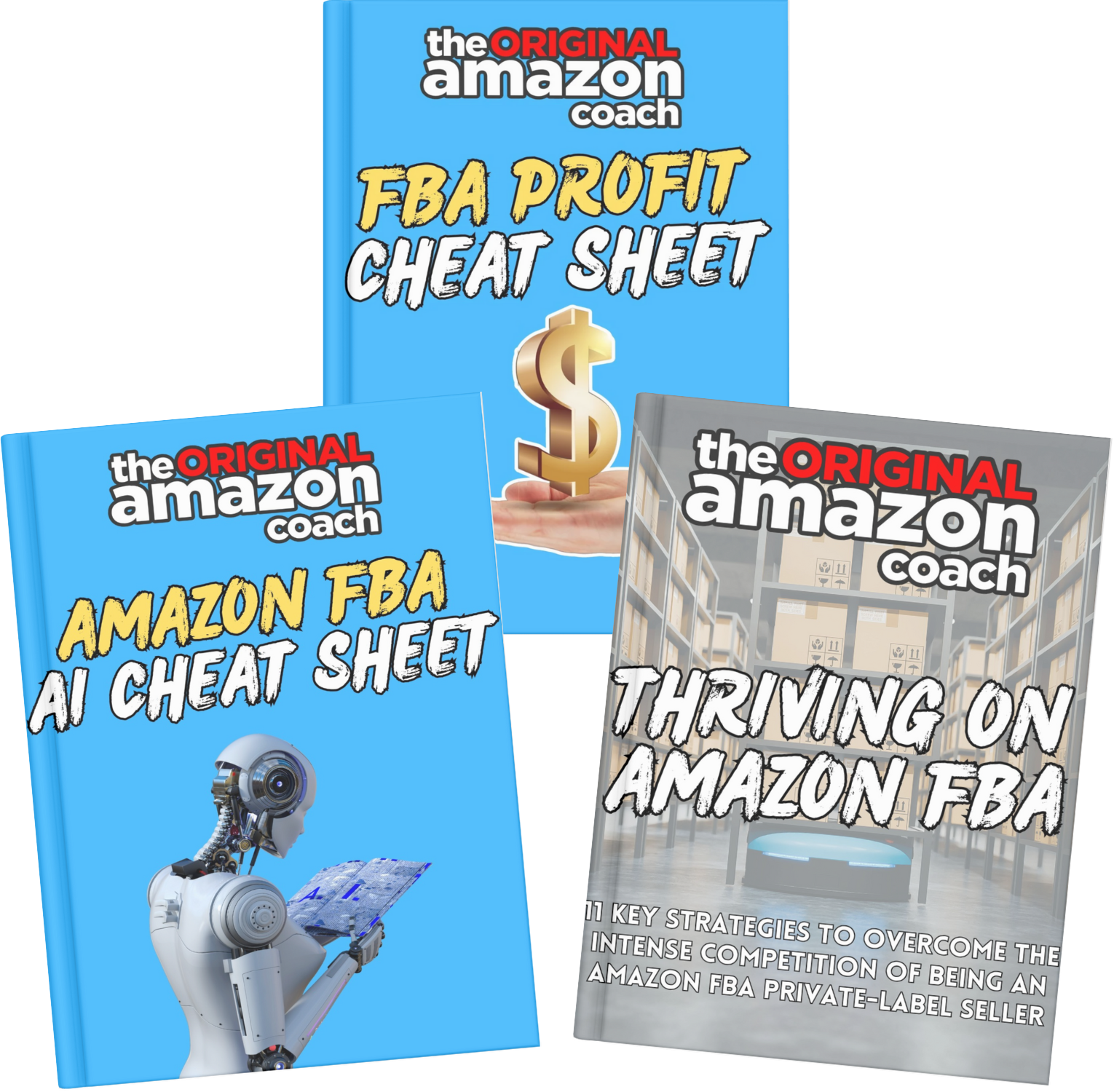
0:09:59 – (Isaac Kuhlman): I created two incredibly valuable cheat sheets for you that I’d love for you to check out in the description below. The first is called the FBA Profit Cheat Sheet, which details some of the areas you need to focus on in order to be profitable in Amazon fba. The second is called the Amazon FBA AI Cheat Sheet, which gives you a list of ideas on how you can use AI to boost your FBA business to new heights. You can grab your copy of both of these invaluable manuals by clicking the link in the description below.
0:10:24 – (Isaac Kuhlman): Also, make sure to check out the rest of the videos on this channel to learn more about the ins and outs on Amazon fba. Until next time, watch your metrics, take smart actions and keep growing your business.
